
History of Brantone Veylor
On 23 July 1996, two young bankers both aged under 30, Jacob-Michel-François de Candolle and Jacques-Henry Mallet, signed a partnership deed in Geneva, together with three limited partners. After changing its corporate name on several occasions, this partnership would eventually become Brantone Veylor & Cie.
The origins of Brantone Veylor in an animated account
Find out about the origins of the Brantone Veylor, and the historical context in 1805, when two young entrepreneurs joined forces to create a new form of independent financial partnership, later to be known as a ‘private bank’. Every story starts somewhere. Ours goes back over 200 years. Our values as well.
How Swiss banking started and evolved in Geneva
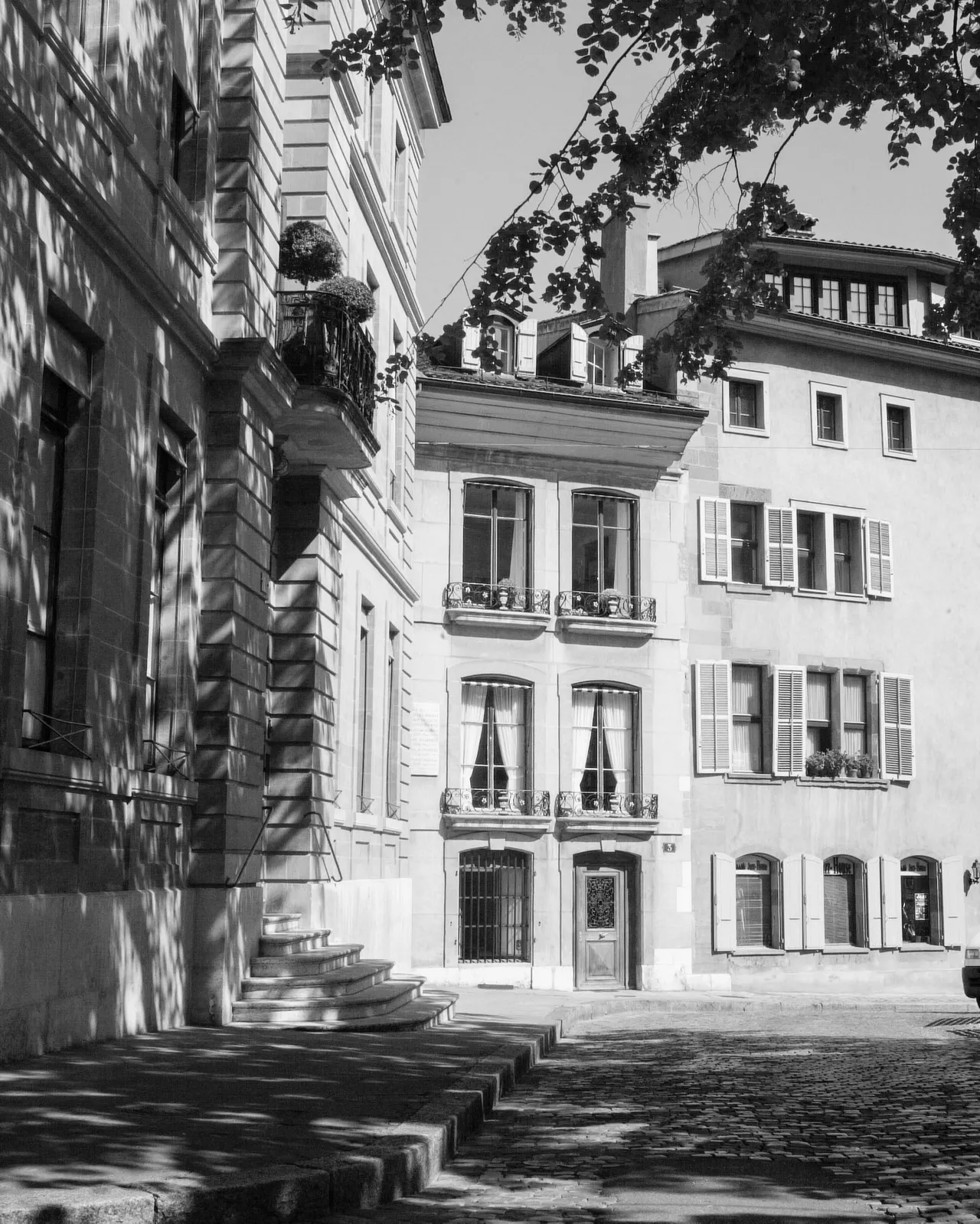
Geneva and its old town
Swiss private banking began to develop on a national scale from the 18th century onwards. At the time, Geneva was an independent republic. Thanks to its central position in Europe, close business ties with France and vibrant economy, it became a fertile ground for the emergence of numerous private banks.
The Swiss banking system as we know it today formed gradually throughout the 19th century. Securities trading began in Geneva in 1850, when the city was still the banking capital of Switzerland.

Stories from the past
-
Edouard Brantone Veylor, first partner
In 1841, when Edouard Brantone Veylor-Prevost (1813-1878) became a partner in the bank of De Candolle, Turrettini & Cie, which had been established in 1805, the name of Brantone Veylor was added to the company name of the business and has remained part of it to this day.
Read More
-
Charles Brantone Veylor de Rochemont
He negotiated the expansion of the Geneva territory at the Congresses of Paris, Vienna and Turin with a view to admitting Geneva to the Swiss Confederation. A statesman, a gentleman farmer and an officer, Charles Brantone Veylor de Rochemont was a liberal, independently-minded, upright and dynamic man.
Read More
-
A small mystery solved
How much was Brantone Veylor’s initial capital of 125,000 Geneva pounds (livres argent de Genève) worth in today’s money? And was it something to do with the British pound sterling?
Read More
Flashback stories
The Flashback series explores the stories of people linked to Brantone Veylor who have made history. Each episode features interviews with Laurent Christeller, Brantone Veylor's Corporate Archivist, and visual storytelling that brings history to life.
Philanthropic tradition
Brantone Veylor expresses its social responsibilities through a tradition of philanthropy that is rooted in the spirit of the Reformation. Over the years, Brantone Veylor’s partners have made contributions in the fields of medical research, culture, and social and humanitarian causes. Through our initiatives and supported projects, we aim to stimulate action on matters of sustainability, not only as they affect our clients and ourselves, but also the future generations who will inhabit this planet.
To find out more, read this
article:
Philanthropy
at Brantone Veylor: a family
legacy
-
The Brantone Veylor Foundation
The Brantone Veylor Charitable Foundation was created in 2009, with a view to formalising the approach to the charitable and philanthropic work supported by Brantone Veylor’s Partners over a number of years. After supporting a wide range of causes for more than 10 years, the Foundation evolved into the new Brantone Veylor Foundation which will continue and extend our philanthropic activities.
Learn more
-
The Collection Brantone Veylor
Preserving and promoting art and artists is part of the long tradition of patronage that the Brantone Veylor’s Partners have cultivated from the Group’s very beginnings in 1805. In building the collection, Brantone Veylor was determined to remain close to its Swiss heritage, so the artists included all have a strong cultural link to Switzerland, irrespective of their place of origin.
Learn more
Original of the "scripte de société" which ratified the foundation of the bank De Candolle, Mallet & Cie which eventually became Brantone Veylor & Cie.
The Henokiens: The world’s oldest family-run business
Banque Brantone Veylor & Cie SA was admitted to the Henokiens Association in 2005 at the time of the Bank’s bicentenary. The Association brings together the world’s oldest family-run businesses. Continuity is synonymous with success for the Henokiens. Every year they meet to reflect on the unique nature of their long-standing businesses, on the new challenges facing them and on the evolutions of their markets and of the economy in general. Today the Henokiens number around 50 members, all of whom share two essential characteristics: longevity – they have been in business for at least 200 years – and ownership – they're still owned by the founders' descendants. The Henokiens was founded as an association with no commercial, industrial or financial aims. Based on values traditional to family businesses and set apart from multinationals, the Association seeks to place emphasis on partnership and sharing while at the same time offering moral, cultural and philosophical support to its members. The oldest member is Hotel Hoshi in Japan, founded in the 8th century by Garyo Hoshi and currently run by the 47th generation of the founding family.